-
Mondriaan Fonds

Site by: Rytm Interactive
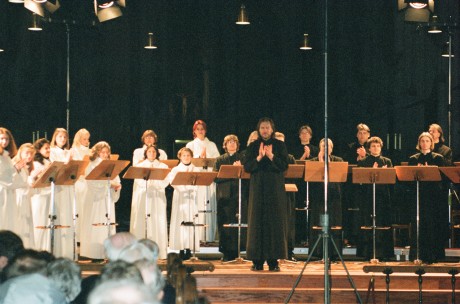
Concert recording of Kanon pokajanen at Nargenfestival, 3.09.2014, St. Nicholas Church, Tallinn.
Parts of the Kanon pokajanen: Ode I, Ode III, Ode IV, Ode VI, Kondakion, Ikos, Ode IX, Prayer after the Canon.
Kanon pokajanen, composed in 1997 using the text of the Canon of Repentance, is the most extensive a cappella choir piece by Arvo Pärt. The composer had already drawn inspiration from this source in the Slavonic Church before; in 1989 he composed the a cappella choir piece Nyne k vam, and five years later, Memento.
A canon used in the Orthodox Church consists of nine odes based on Biblical themes, which are made of several short stanzas. Traditionally, the second ode is omitted in all canons, and the composer too has followed this practice. The first stanza in each ode is called an irmos. It offers praise to the Lord, with its contents usually taken from the Old Testament. Irmoi are followed by troparia that speak about repentance and lamentations over one’s own weakness. Just as the irmoi contrast with the troparia in a canon, in Pärt’s composition too we witness a clear musical contrast between these two.
It took more than two years to compose Kanon pokajanen, and similar to his other vocal pieces, this too is directly based on language:
I wanted to give the words the opportunity of choosing their own sounds, of drawing their own musical line. So—to my own surprise—a music arose that was permeated with the strange character of this special language used only in liturgical texts. It was this Canon that showed me clearly how much the choice of a language predetermines the character of a work—to such an extent in fact that the whole construction of the composition is subjugated to the text and its laws, if one allows the language to “make its music.”
(Enzo Restagno (2012). Arvo Pärt in Conversation. Dalkey Archive Press 2012, p. 85).
The composition was premiered on 17 March 1998 in Germany, at a concert celebrating the 750th anniversary of the Cologne Cathedral. It was presented by the Estonian Philharmonic Chamber Choir conducted by Tõnu Kaljuste, to whom (the choir and the conductor) the piece was also dedicated. The way Kanon pokajanen is composed gives a conductor the freedom to choose which parts of the composition he or she wishes to bring to the audience. However, regardless of its shortened form, the essence of the piece remains the same. The eternal prayer in Kanon still connects performers with listeners, creating in all of us the need for light and the purity of the soul.
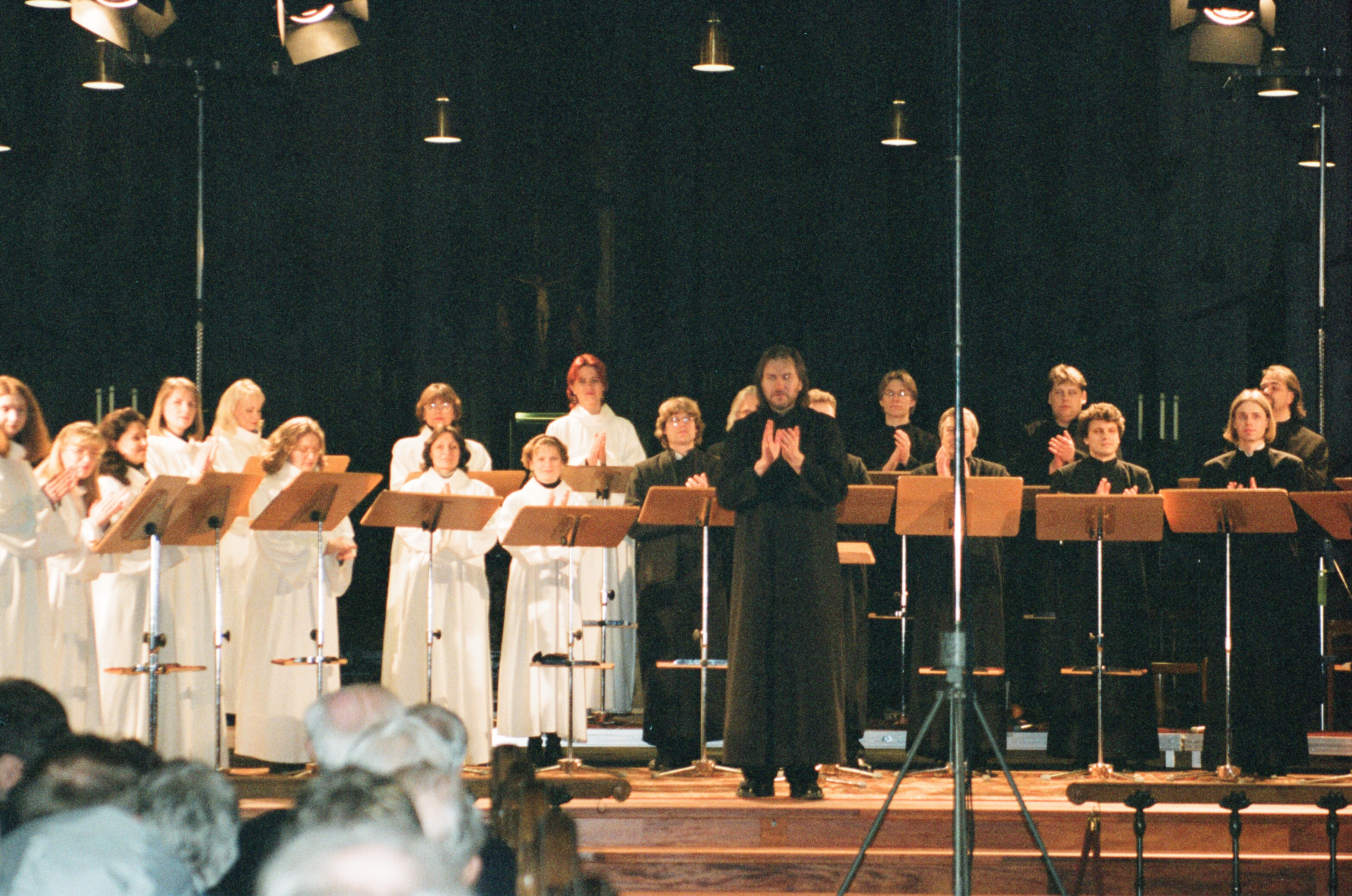
Conductor Tõnu Kaljuste and Estonian Philharmonic Chamber Choir at the premiere on 17 March 1998 at the Cologne Cathedral. Photo: Eric Marinitsch.