-
Mondriaan Fonds

Site by: Rytm Interactive
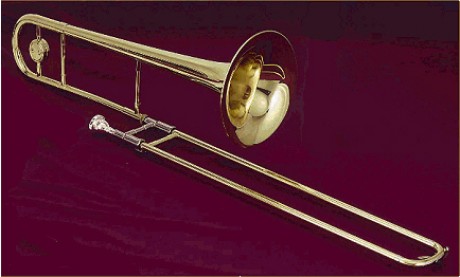
Kazimierz Serocki’s Concerto for trombone was written in 1953. Alongside his Suite for four trombones and Sonatina for trombone and piano, it is one of those pieces by the Polish composer that demonstrate his great familiarity with the secrets of the instrument. The concerto is also an example of his use of motifs inspired by Polish folklore as well as neoclassical style (Serocki drew here on classic formal models like the sonata form or rondo).
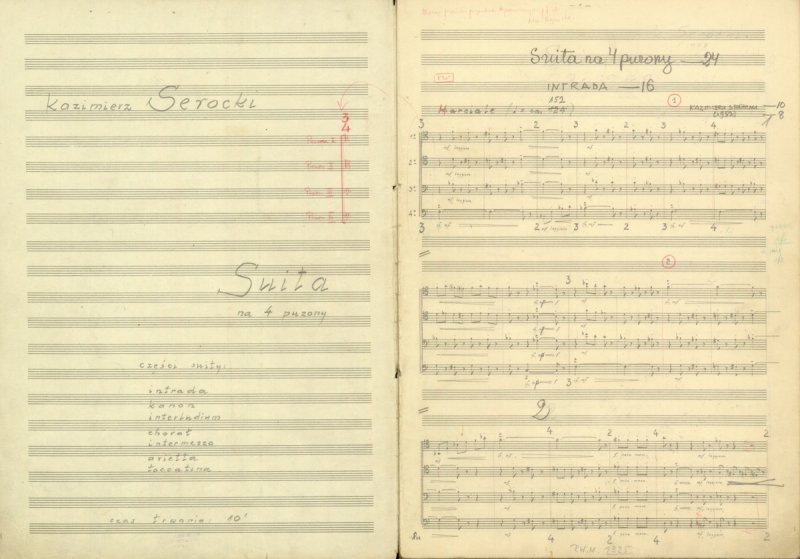
A page of the manuscript of Suite for 4 trombones. Warsaw University Library. Courtesy of Polish Music Information Centre
The work comprises four movements with the third – like in a classic symphony – being a dazzling, light and playful scherzo (Allegro grazioso). The first movement (Lento espressivo, molto rubato – Allegro) is a highly virtuoso show of trombone playing interspersed with striking “entries” of the orchestra. The second movement (Largo, molto cantabile), on the other hand, is an example of music with truly romantic, great expressive power. The finale (Allegro) is again light, witty and playful music with a considerable virtuoso element.
Serocki’s Concerto for trombone was premiered during Juliusz Pietrachowicz’s graduation concert on 18 December 1954. Collaboration with this virtuoso, the first trombone player in the Warsaw Philharmonic, was the main inspiration for all of Serocki’s works for the trombone. The composer knew very well what combination of sounds or specific articulations are possible on the instrument, and made a brilliant artistic use of them.
“The solo instrument part, fully utilizing its technical and expressive possibilities, is written in a very ‘trombone-like’ manner. Thus, the soloist can produce a great performance in terms of both technique and interpretation,” read the programme note before the premiere of the work (Programme of the 11th Symphonic Concert of the Warsaw Philharmonic, 18 and 20 December 1953, pp. 1–2). The concerto is still quite popular with performers.